
Let’s begin with a fact that surprises many people.
Did you know that roughly half of the oxygen produced on Earth comes not from trees, but from microorganisms in our oceans?
And what do whales—and plastic—have to do with that?
Here is the story.
We know that plastic is now everywhere: in the air we breathe, in our soil and waterways, and throughout our oceans.
Plastic has been found in whales around the world, from tiny fragments swallowed along with their prey to plastic bags, ropes, fishing gear and other debris discovered in their stomachs. In some extraordinary cases,tens of kilograms of plastic have been found inside a single whale.
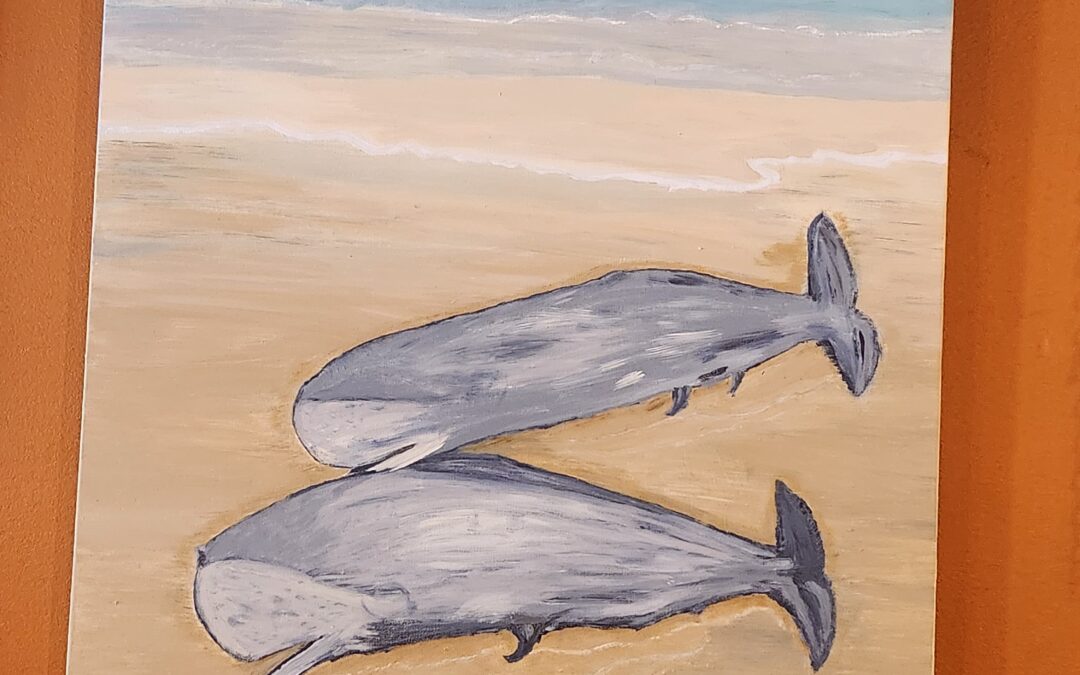
When dead whales wash ashore, what is found inside them can sometimes reveal the staggering extent of the problem.
When plastic becomes food
Whales do not need to mistake a plastic bag for a meal. Plastic can enter their bodies simply through the way they feed.
Toothed whales may swallow larger pieces of debris while pursuing prey. Baleen whales filter enormous quantities of seawater to capture krill and small fish, taking in microplastics along with their food.
Once inside, larger pieces of plastic can block or damage the digestive tract, interfere with feeding and create a false sensation of fullness. In severe cases, the consequences can be fatal.
Whales that wash ashore sometimes make the problem dramatically visible. But what we find in their stomachs tells only part of the story. Much of the plastic now circulating through our oceans is microscopic.
But here’s where the story takes an unexpected turn.
Large whales feed at depth and return toward the ocean surface, where they breathe, and poop.
It may not sound particularly important. It is.
Remember those tiny organisms responsible for producing roughly half of the oxygen on our planet? Whale waste helps feed them.
Whale feces bring valuable nutrients, including nitrogen and iron, to sunlit surface waters. These nutrients fertilize phytoplankton; the microscopic organisms that use sunlight to grow and produce oxygen.
We rightly think of forests as the lungs of our planet. But there is another immense, largely invisible oxygen-producing world covering most of Earth.
It is blue.
And a great whale keeps giving back even after it dies. When its body sinks into the deep ocean, it becomes food and habitat for entire communities of marine life.
So whales are part of a remarkable cycle: they move nutrients through the ocean, nourish marine life and help sustain the tiny organisms responsible for much of the oxygen produced on Earth.
That gives plastic pollution another dimension.
Protecting whales is not only about protecting magnificent animals. It is about protecting relationships; the immense and mostly invisible web connecting whales, plankton, oceans, climate and life on land.
The next breath you take may have begun in the ocean.